

Table of Contents
- Why Trendy Furniture Becomes Regret
- How to Spot High Quality Furniture Before You Buy
- Timeless Furniture Styles That Actually Endure
- The Trend Cycle: Understanding What Will Fade Fast
- How to Mix Modern and Classic Decor Without Clash
- Testing Furniture and Spatial Planning Before Committing
- Investment Pieces That Hold Their Value
Last Updated: August 18, 2026
Why Trendy Furniture Becomes Regret
The furniture you love today often becomes the furniture you resent in two years. That sculptural accent chair that felt bold and modern? It's suddenly dated. Understanding why trendy furniture regret happens is the first step toward making choices you'll actually live with long-term.
Trendy pieces capture a moment in design culture, not a timeless aesthetic. They're designed to feel fresh precisely because they break from what came before. The problem isn't that trends exist; it's that most people treat trendy items as if they'll remain relevant indefinitely.
At Unapologetic Luxury Designs, we see this pattern repeatedly. The gap between "I love this right now" and "I'll still want this in 2029" is where trendy furniture regret lives. The good news is that this regret is entirely preventable if you understand what separates a fleeting trend from a lasting design choice.
The real distinction comes down to proportions, material integrity, and design DNA. A piece that's trendy because of its color or ultra-specific style detail will feel dated when that trend cycles out. But a piece that executes a timeless silhouette in a fresh way, or combines enduring proportions with quality construction, can remain relevant for decades.
How to Spot High Quality Furniture Before You Buy
Quality furniture has measurable characteristics that predict longevity. Before committing to any piece, examine these specific markers: solid wood construction versus veneer, joinery methods, upholstery durability, and frame stability.
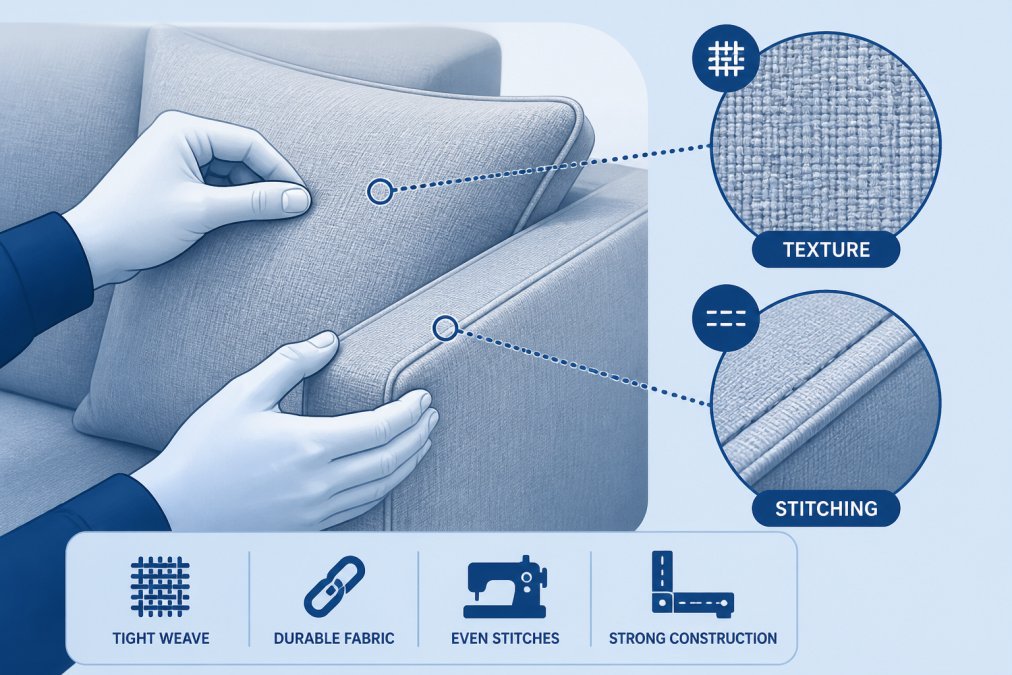
Start with the frame. Hardwood frames (oak, maple, ash) resist warping far better than softwood or particleboard. Check the joints: quality furniture uses mortise-and-tenon joinery or dowel construction, not staples or nails alone. If a piece feels wobbly when you sit on it, the frame is already compromised.
Upholstery material matters more than most buyers realize. Natural fabrics like linen, wool, and cotton age more gracefully than synthetic blends. If you choose synthetics, look for performance fabrics rated for high durability. Check the fabric weight: lighter fabrics pill and wear through faster. A quality upholstered piece should use eight-way hand-tied springs or sinuous springs, not cheap foam-only construction.
Stitching quality reveals manufacturing standards. Examine seams and topstitching: straight lines, even spacing, and tight tension indicate precision. Count stitches per inch on seams; quality upholstery typically has 8-10 stitches per inch. This detail determines how long seams will hold before fraying or separating.
Test the cushion compression. Press your hand into any cushion and hold it for five seconds, then release. High-quality cushions recover immediately; cheap foam collapses and stays compressed. This simple test predicts how quickly a piece will sag and lose its shape.
Timeless Furniture Styles That Actually Endure
Not all styles age equally. Some designs feel dated within three years; others remain relevant across decades.
Mid-century modern silhouettes endure because they balance form and function without relying on ornament or specific color trends. A well-proportioned chair with clean lines, tapered legs, and a simple frame works in 1960, 2000, and 2026 because the design solves a problem elegantly rather than chasing aesthetic novelty.
Contemporary minimalism also ages well when built from quality materials that show their age gracefully: solid wood, natural stone, linen. A minimalist sofa in gray linen with a solid wood frame will look intentional and refined in 2030.
Transitional design, the blend of traditional proportions with modern simplicity, offers the most forgiving approach. A sofa with slightly curved arms, neutral upholstery, and clean lines works across design contexts. It's neither aggressively trendy nor obviously dated.
Classic silhouettes with enduring appeal share these characteristics: proportions that feel balanced rather than exaggerated, materials that improve with age, and details that don't scream a specific era. A solid wood coffee table with simple geometric lines works in any decade.

The Trend Cycle: Understanding What Will Fade Fast
Design trends follow predictable cycles. Most design trends have a three- to five-year lifespan from emergence to saturation to decline.
When a trend first emerges, early adopters embrace it during a 12-18 month window. Pieces are scarce, prices are high, and the design feels genuinely fresh. If you buy during this window, you're taking the highest risk that it'll feel dated sooner.
The growth phase follows, lasting 18-24 months. The trend spreads across price points and retailers. This is when trendy furniture regret often begins, because the design that felt exclusive is now everywhere.
The peak phase is deceptively dangerous. The trend is at maximum visibility, which feels like validation that it's "safe" to buy. But peak visibility is actually the warning sign. If everyone's talking about it and every retailer carries it, the decline phase is imminent.
The decline phase spans 12-18 months. The trend is still visible but losing momentum. Pieces that felt bold now feel mainstream or slightly off. This is when many buyers experience trendy furniture regret.
To avoid this cycle, ask yourself: Is this trend already visible across multiple major retailers? Are influencers and design magazines still covering it heavily? If yes to both, you're likely at or past peak saturation. The safer choice is to wait for the trend to fade, then incorporate subtle versions through accent pieces rather than anchor furniture.
How to Mix Modern and Classic Decor Without Clash
Mixing modern and classic decor is entirely achievable if you follow basic spatial planning and design proportion rules.
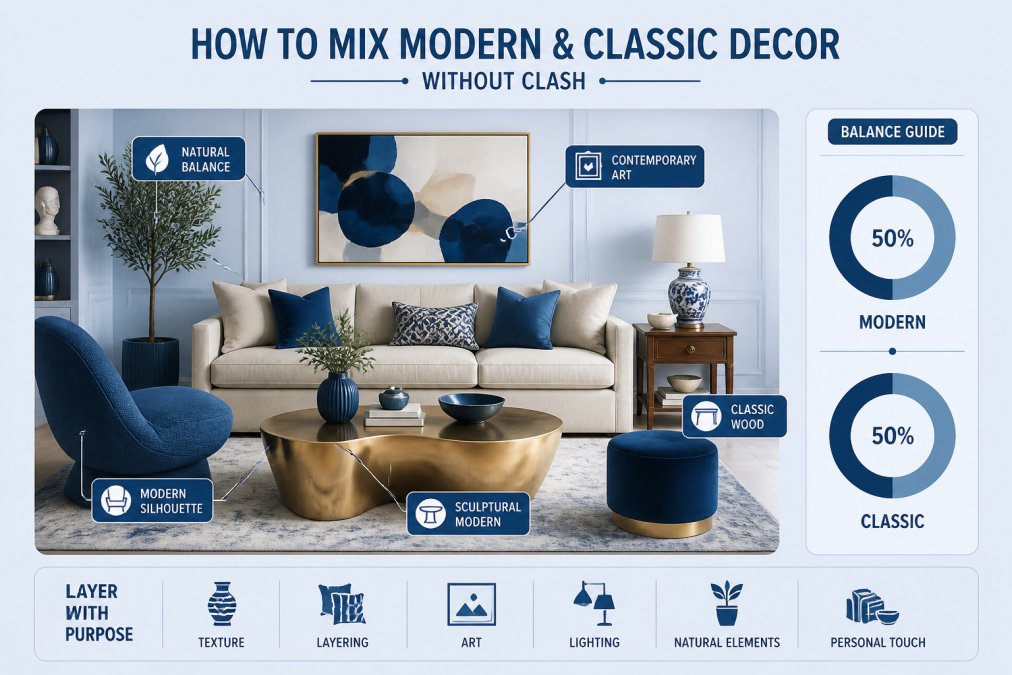
Start with a neutral foundation. Anchor your space with neutral-colored, classic-proportioned pieces: a sofa in cream linen, a wooden dining table with simple lines, basic storage. Against this neutral backdrop, modern statement pieces read as intentional accents rather than chaotic additions.
Scale matters enormously. A large, sculptural modern coffee table works in a living room with high ceilings and substantial seating. Before buying any statement piece, measure your actual space and consider sight lines. The piece should command attention without dominating the room.
Color creates coherence. Limit your palette to three to four colors maximum, with 60 percent neutral and 40 percent accent. Modern pieces can introduce bolder colors, but they should echo colors already present in classic pieces.
Material mixing is where many people hesitate unnecessarily. Solid wood, metal, glass, and natural stone coexist beautifully when proportions are balanced. A modern glass and metal side table next to a classic wooden chair works because the materials complement rather than compete.
Layering prevents flatness. A room with only classic pieces feels dated; a room with only modern pieces feels cold. Combine both to create depth and personality. Add modern art to classic walls. Place a contemporary rug under a traditional wooden table.
Testing Furniture and Spatial Planning Before Committing
The costliest mistake is buying furniture without testing how it actually feels and functions in your space. Online shopping creates distance from this reality, which is why so many buyers experience trendy furniture regret.
Before buying any major piece, test it in person if possible. Sit on sofas and chairs for at least five minutes. Does the seat depth feel right? Is the back support comfortable for extended sitting? Can you actually recline or move around?
For online purchases, use digital visualization tools to see how pieces fit in your actual space. Measure your room dimensions, doorway widths, and ceiling heights. Many furniture retailers now offer augmented reality tools that show pieces in your space using your phone camera.
Create a spatial plan before purchasing multiple pieces. Sketch your room layout with existing furniture, then identify where new pieces fit. Consider traffic flow, sight lines from your main seating area, and how natural light interacts with the space.
Test color and material in context. Request fabric samples for upholstered pieces and have them shipped to your home. Live with the sample for a few days in different lighting conditions. Morning light, afternoon light, and evening lamplight reveal how colors actually feel in your space.
Investment Pieces That Hold Their Value
Some furniture pieces actually appreciate in value or hold their cost for years. These are typically pieces with genuine design significance, exceptional craftsmanship, or materials that improve with age.
Authenticated designer furniture from established mid-century modern brands holds value remarkably well. A genuine Charles and Ray Eames chair, a Florence Knoll table, or a Hans Wegner piece maintains or increases in value because the design is recognized, the craftsmanship is verifiable, and collectors actively seek these pieces. Designer-inspired knockoffs don't hold value; they depreciate like any other trendy furniture.
Solid wood pieces from quality makers appreciate or hold value because the materials are genuine and the construction is sound. A well-made walnut credenza, a solid oak dining table, or a teak sideboard actually improves visually as the wood ages. The patina deepens, the color matures, and the piece gains character.
Upholstered pieces hold value primarily through quality and timelessness of design. A sofa in a classic silhouette with solid wood frame, eight-way hand-tied springs, and quality upholstery remains desirable even as decades pass. The upholstery can be replaced, refreshing the piece while maintaining the valuable frame.
Natural stone and solid metal pieces are inherently durable and valuable. A marble side table, a solid brass bookshelf, or a slate-topped coffee table maintains appeal across design trends because the materials themselves are timeless.

Consider resale value when evaluating pieces. Search completed listings on resale platforms to see what similar pieces actually sell for. If a piece retains 40-50 percent of its original cost on the secondhand market after five years, it's a reasonable investment.
The distinction between investment and trendy comes down to this: investment pieces are built to last, designed to remain relevant, and constructed from materials that improve with age. Trendy pieces are built to appeal right now, designed around current aesthetics, and constructed from materials that show wear or feel dated quickly.
| Characteristic | Investment Piece | Trendy Piece |
|---|---|---|
| Frame Construction | Solid hardwood, mortise-and-tenon joinery | Particleboard, staple-only assembly |
| Upholstery | Natural fibers, 8+ stitches per inch | Synthetic blends, visible loose stitching |
| Design Proportions | Balanced, timeless silhouettes | Exaggerated, trend-specific shapes |
| Color Choice | Neutral or classic accent colors | Ultra-specific trendy hues |
| Material Quality | Genuine wood, stone, metal | Veneers, laminate, cheap fabric |
| Resale Value | 40-60% of original after 5 years | 10-25% of original after 5 years |
| Design Relevance | Works across multiple style contexts | Feels dated outside its trend cycle |
Avoiding trendy furniture regret isn't about rejecting bold design or refusing to take aesthetic risks. It's about making intentional choices based on quality, proportion, and longevity rather than impulse and trend cycles. The pieces you buy should reflect who you are now and who you want to be in five years.
At Unapologetic Luxury Designs, we believe that bold, modern design doesn't have to mean temporary. Our curated collection of statement pieces combines sculptural beauty with solid construction, pieces designed to anchor your space for years, not months. When you invest in a Gold Stainless Steel Cloud Coffee Table or a Solid Wood Coffee Table, you're choosing pieces built from genuine materials with timeless proportions. These aren't trend-chasing purchases, they're investments in spaces you'll love living in, not regret.
Frequently Asked Questions
What style of furniture never goes out of style?
Neutral-palette pieces with clean lines and classic silhouettes remain timeless. Think solid wood frames, neutral upholstery in gray or cream, and functional designs without heavy ornamentation. Mid-century modern shapes, simple Scandinavian aesthetics, and minimalist forms have proven aesthetic longevity across decades. The key is avoiding bold color trends, oversized patterns, and novelty materials that anchor a piece to a specific moment in time.
How can I tell if a furniture trend will last?
Trends that stick around typically serve a functional purpose beyond aesthetics. Ask: Does this solve a real need? Is it featured across multiple design categories, not just one trend cycle? Does it complement neutral backdrops, or does it demand a specific color scheme? Modular furniture, ergonomic seating, and pieces addressing space-saving have longer lifespans. Conversely, trends driven purely by color, novelty shapes, or celebrity endorsement fade within 2-3 years. Look at design forecasting timelines and check whether the trend appears in classic design archives.
What are the most common interior design regrets?
Impulse purchases during sales rank highest, buyers often regret not measuring spaces or considering scale. Mismatched design proportions create visual weight imbalance that feels off for years. Clutter from overbuying statement pieces overwhelms functional layout. Choosing trendy colors over neutral palettes creates dated interiors quickly. Ignoring upholstery durability and fabric performance leads to wear that reveals cheap construction. Finally, buyers remorse stems from not testing furniture in-room before committing or underestimating how bold pieces read in actual living spaces versus photos.
How do I balance trendy decor with timeless furniture?
Invest in timeless foundation pieces, solid wood coffee tables, neutral upholstered seating, classic silhouettes, then layer trends through accent pieces, textiles, and decor you can swap easily. A sculptural modern coffee table like the Gold Stainless Steel Cloud Coffee Table works as a statement investment because its form transcends trend cycles, while accent pillows and wall art handle temporary trends. This approach lets you refresh your space without replacing core furniture, reducing buyers remorse and waste while maintaining design cohesion.
This article was written using GrandRanker