

Table of Contents
- Why Sculptural Furniture Works in Small Living Rooms
- Understanding Scale and Proportions for Small Spaces
- How to Arrange Furniture in a Small Living Room for Maximum Impact
- Space-Saving Sculptural Accent Chairs That Define Your Layout
- Creating a Gallery-Like Aesthetic Without Clutter
- Multi-Functional Pieces and Placement Rules for Small Footprints
- Maintenance and Longevity of Sculptural Statement Pieces
- Conclusion
Last Updated: August 9, 2026
Why Sculptural Furniture Works in Small Living Rooms
Sculptural furniture for small living rooms solves a problem most people don't realize they have: the choice between personality and space. A typical small apartment feels like a compromise, you either fill it with functional basics that bore you, or you squeeze in pieces that overwhelm the footprint. Sculptural furniture breaks that false choice.
These aren't just chairs or tables. They're functional art that commands attention without demanding square footage. A single undulating accent chair becomes your room's anchor piece, replacing what would normally require three separate items. The silhouette itself creates visual interest that minimalist spaces desperately need.
At Unapologetic Luxury Designs, we've seen this shift transform how young professionals and design-conscious homeowners approach their first real living spaces. When you choose statement pieces deliberately, you're not cluttering, you're curating. The architectural quality of a sculptural piece means it works harder for you, delivering both aesthetic impact and practical function in one object.
The real advantage? These pieces scale your design ambition without scaling your footprint. A gallery-like aesthetic used to require a sprawling loft. Now it's achievable in 400 square feet if you understand how to use spatial flow and negative space strategically.
Understanding Scale and Proportions for Small Spaces
The biggest mistake with sculptural furniture in compact rooms is choosing pieces that look stunning in a showroom but dominate your actual living area. Scale isn't just about size, it's about visual weight and how a piece relates to the dimensions around it.
A monolithic sculptural chair that works in a loft becomes a space-stealing anchor in a studio apartment. The proportions need to match your footprint. This means understanding the relationship between the furniture's silhouette and the walls, windows, and doorways that define your room.
Start by measuring your space honestly. Not just square footage, the actual sight lines from your entry, the wall lengths, the distance to your ceiling. A piece that's visually balanced in a ten-foot-wide room might feel cramped in an eight-foot one. Proportions matter more than the object's actual dimensions.
Sculptural pieces with organic shapes or geometric forms often feel smaller than boxy alternatives because they create negative space around themselves. A chair with curved, undulating lines reads as less imposing than a solid rectangular sofa, even if they occupy similar floor space. This is why architectural furniture works so well in compact living, the design itself creates breathing room.
The height of your sculptural piece matters too. A tall statement chair draws the eye upward, which makes a room feel less cramped. But if your ceiling is low, that same height becomes oppressive. Match your piece's proportions to your room's vertical dimension, not just its floor plan. This is where most online furniture shopping fails, you see a beautiful object without understanding how it will feel in your actual spatial context.
How to Arrange Furniture in a Small Living Room for Maximum Impact
Placement determines whether your sculptural pieces elevate a room or make it feel cluttered. This is where understanding spatial flow becomes critical. Your arrangement should create a natural path through the room, not a maze where people navigate around furniture.
Start by identifying your focal point. In a small living room, this is usually a window, a wall you see first when entering, or a architectural feature like a fireplace. Your sculptural anchor piece should either align with this focal point or create one. A single statement chair positioned opposite your entry becomes an immediate visual anchor that organizes the entire room around it.
The rule most designers miss: in compact spaces, furniture placement should create zones without walls. A sculptural accent chair and a small side table define a reading nook. A low console creates a display area. These groupings establish spatial efficiency without requiring actual divisions. Your room feels intentional, not cramped.
Negative space is your most valuable tool. Resist the urge to fill every corner. A single sculptural piece in an otherwise open area reads as curated. The same piece surrounded by other furniture reads as crowded. Leave breathing room around your statement pieces, it amplifies their impact and makes your entire room feel larger.
Distance matters too. Position your sculptural furniture at least two feet from walls when possible. This creates visual separation that makes pieces feel like independent objects rather than room fixtures. It sounds counterintuitive in a small space, but this distance actually makes rooms feel more spacious because it breaks the wall-to-wall visual continuity that makes compact areas feel confining.
Consider traffic patterns before placement. Furniture that blocks natural movement paths creates frustration that undermines any aesthetic gain. Your sculptural pieces should define the room's flow, not obstruct it. This means placing them where they're visible from multiple angles but don't interrupt the most direct routes through your space.
Space-Saving Sculptural Accent Chairs That Define Your Layout
An accent chair is where sculptural furniture delivers maximum impact in minimal footprint. These pieces do what three separate items would accomplish, seating, visual interest, and spatial organization, while occupying less floor space than a traditional sofa.
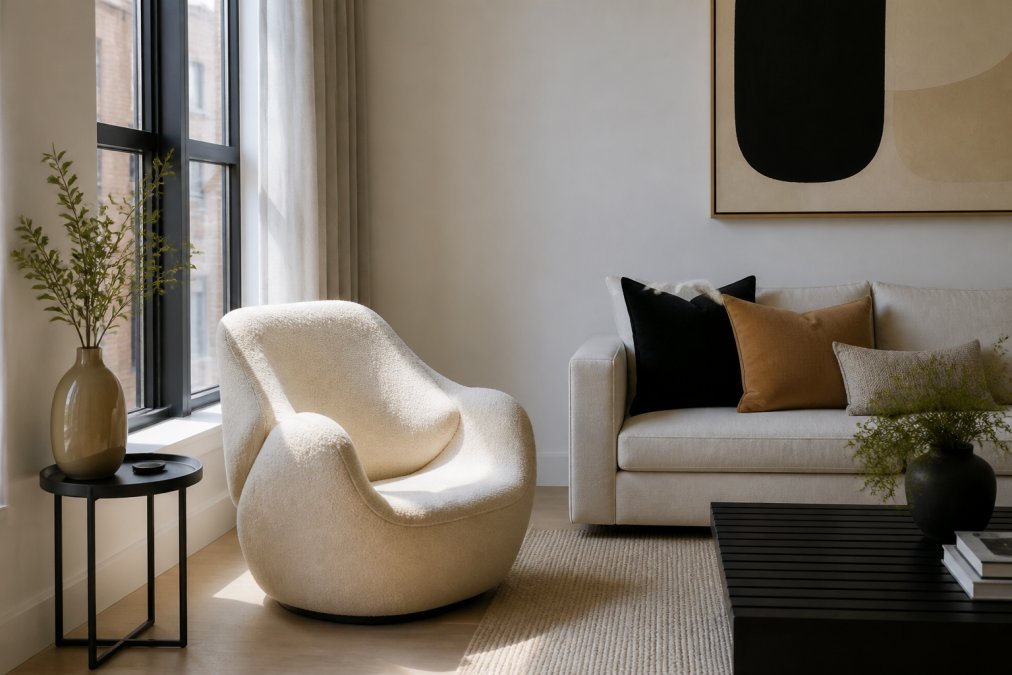
The key is choosing a chair with an architectural silhouette that commands attention. Geometric forms, undulating curves, or bold asymmetrical designs create visual weight without physical bulk. A sculptural accent chair becomes your room's conversation starter because it looks intentional, not like a leftover piece squeezed into a corner.
Placement strategy matters. Position your accent chair at an angle rather than flush against a wall. This creates a dynamic arrangement that feels more sophisticated and uses space more efficiently. An angled chair also creates the illusion of spatial flow, the room feels less like a grid of furniture and more like a curated collection.
Color and material choice amplify the space-saving effect. Sculptural chairs in bold colors or distinctive textures become focal points that draw the eye, making them feel more substantial than their actual size. A monolithic piece in a single material, like a sculptural chair in warm wood tones or a single upholstery color, reads as one unified object rather than multiple visual elements competing for attention.
The best sculptural accent chairs for small spaces have legs rather than skirted bases. Visible legs create visual lightness because you can see the floor beneath them. This is a simple design principle that dramatically changes how a piece feels in a compact room. A chair that appears to float slightly above the floor takes up less visual space, even if its actual footprint is identical to a skirted alternative.
Creating a Gallery-Like Aesthetic Without Clutter
A gallery-like aesthetic is the holy grail for design-conscious people with small spaces. The challenge is achieving that curated, intentional feeling without the clutter that kills the effect. This requires understanding the difference between curation and accumulation.
Start with constraint. Choose three to five sculptural pieces maximum for a small living room. This isn't deprivation, it's intentionality. Each piece should earn its place by either serving a functional purpose or creating significant visual impact. If a piece does neither, it's clutter, no matter how beautiful.
Negative space is what separates a gallery aesthetic from a crowded room. In a gallery, you notice the empty wall as much as the art. Apply this principle to your small living room. Leave walls partially bare. Create visual breathing room around your sculptural pieces. This emptiness is the design, it's what makes your curated pieces feel intentional rather than scattered.
Functional art solves the space problem elegantly. Sculptural lighting, architectural shelving, or a geometric side table serves a purpose while contributing to your gallery-like aesthetic. You're not adding decorative objects, you're selecting pieces that work harder because they're both beautiful and useful.
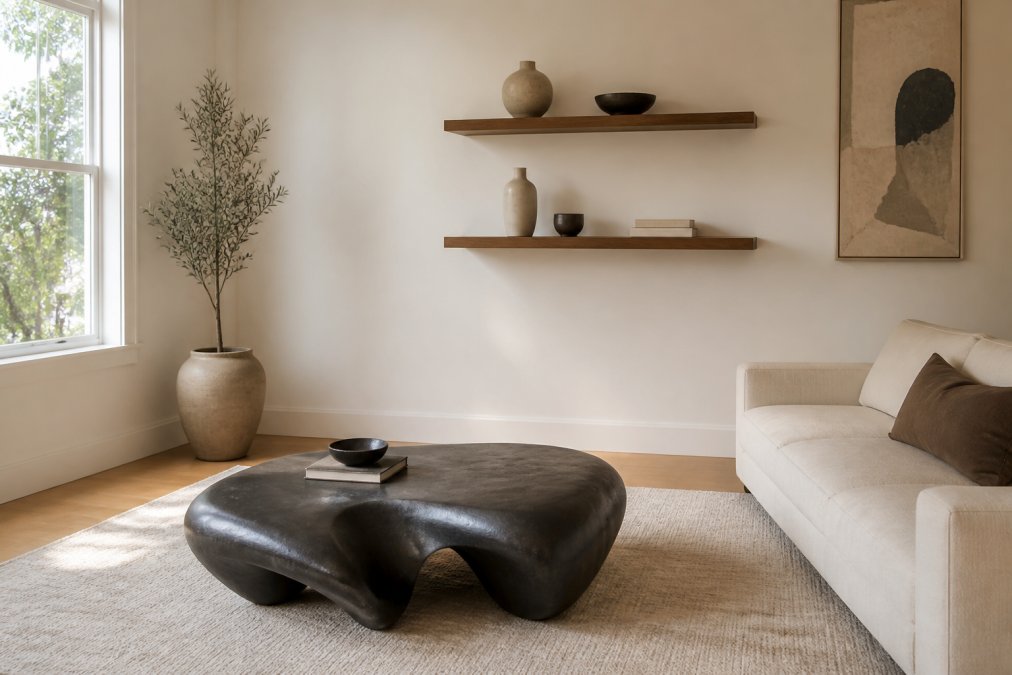
Color consistency strengthens the gallery effect. A limited palette, say, warm neutrals with one accent color, makes your space feel more curated. Your sculptural pieces become focal points because they're not competing with visual chaos. This is where most small-space decorating fails: too many colors and styles make even intentional pieces feel random.
Display your pieces like a gallery would. Proper lighting, clear sightlines, and strategic spacing transform ordinary furniture into art installations. A sculptural chair positioned where light hits it at a particular angle becomes more dramatic. A statement piece on a clear wall draws more attention than the same piece surrounded by competing visual elements.
Multi-Functional Pieces and Placement Rules for Small Footprints
Multi-functional furniture is non-negotiable in small spaces, but it doesn't mean sacrificing sculptural beauty. The best pieces combine artistic design with practical utility, a sculptural storage unit, a geometric side table that serves as a plant stand, or an undulating bench that provides seating and visual interest simultaneously.
The placement rule for multi-functional pieces is straightforward: position them where they serve their primary function most effectively. A sculptural storage unit should be accessible, not hidden in a corner. A geometric side table works best near your seating area where it's functional and visible. This isn't about hiding utility behind design, it's about making utility part of the design.
Stack functions vertically when possible. A tall sculptural shelving unit uses vertical space instead of floor space. This is how you add storage, display surfaces, and visual interest without expanding your footprint. The architectural quality of the piece means it doesn't feel like a utility object, it reads as a design statement.
Consider the traffic flow around multi-functional pieces. A storage unit shouldn't block your entry. A display table shouldn't interrupt the primary sightline through your room. Multi-functional pieces work best when they enhance spatial flow rather than obstruct it. This is where understanding your room's layout becomes critical, placement determines whether a piece feels integrated or intrusive.
Material durability matters more in small spaces because pieces get used more frequently. Sculptural furniture that looks beautiful but requires careful maintenance becomes stressful in a space where you live actively. Choose materials that age well and handle regular use without deteriorating. This is where quality craftsmanship becomes essential, pieces need to maintain their sculptural impact over time.
Maintenance and Longevity of Sculptural Statement Pieces
Sculptural furniture represents a meaningful investment in your space. These aren't disposable trend pieces, they're designed to define your room for years. Understanding how to maintain them ensures they stay beautiful and functional.
Different materials require different approaches. Sculptural pieces in natural wood need regular conditioning to prevent drying and cracking. Upholstered statement chairs benefit from professional cleaning annually. Metal or geometric pieces often require minimal maintenance but may need occasional polishing to maintain their visual impact. Know what your specific pieces need before you buy them.
The longevity question matters more than most people realize. A sculptural chair that looks stunning now but shows wear within two years isn't a good investment. Choose pieces from makers who prioritize enduring craftsmanship. This is where Unapologetic Luxury Designs differentiates itself, the collection emphasizes pieces designed to age gracefully, not trend quickly.
Placement affects longevity too. Direct sunlight fades fabrics and can warp wood. High-traffic areas expose pieces to more wear. Position your sculptural furniture where it's visible and accessible but protected from the elements that age it fastest. This strategic placement extends the life of your pieces and maintains their visual impact.
Cleaning and care should be built into your routine, not treated as occasional maintenance. A sculptural piece that accumulates dust or stains loses its architectural impact. Regular, gentle care, appropriate to the material, keeps your pieces looking intentional and curated rather than neglected.
The investment perspective matters here. A sculptural piece you maintain properly and keep for a decade is far more cost-effective than replacing trend-driven furniture every two years. This is why quality matters in small spaces especially, you're living with these pieces daily, and they define your environment completely.
Sculptural furniture for small living rooms isn't about compromise, it's about multiplication. You're choosing pieces that do more with less, that create impact without demanding space, that transform compact living into curated design. The challenge is selecting with intention and understanding how placement, scale, and material quality work together.
At Unapologetic Luxury Designs, we've built our collection around this principle: bold, architectural pieces that elevate small spaces through enduring craftsmanship and audacious design. Our sculptural statement pieces combine the visual impact of gallery-quality art with the everyday functionality your living room needs. Shop our collection to find pieces that transform your compact space into a sophisticated sanctuary that reflects your fearless aesthetic.
Frequently Asked Questions
How do you choose sculptural furniture for a small living room?
Start by identifying your room's architectural features and natural light. Choose one sculptural piece as your anchor, typically an accent chair or side table with a strong silhouette. Measure your space carefully; sculptural furniture should occupy no more than one-third of your room's visual weight. Consider organic shapes or monolithic designs that feel intentional rather than cluttered. Select pieces with clean lines and minimal footprints that serve a functional purpose alongside their artistic appeal. Finally, ensure your statement piece complements your color scheme and existing layout.
Does sculptural furniture make a small living room look smaller?
Not if placed strategically. Sculptural furniture can actually enhance spatial flow when positioned as a focal point rather than scattered throughout. A single well-placed statement piece draws the eye and creates visual interest without consuming square footage. The key is negative space, leave breathing room around your sculptural pieces. Pieces with open frames or elevated bases create less visual weight than solid furniture. Monolithic or undulating designs often feel less intrusive than boxy alternatives, making them ideal for compact living rooms.
What materials work best for sculptural furniture in small spaces?
Materials that balance durability with visual lightness perform best. Metal frames with upholstered seats, natural wood with organic curves, and composite materials offer both functionality and aesthetic appeal. Avoid materials that require intensive maintenance in small spaces where dust and wear are more visible. Bespoke designs using high-quality textiles and finishes ensure your statement pieces remain timeless rather than trendy. Consider how materials age, quality craftsmanship means your sculptural investment looks intentional for years, not dated within seasons.
How many sculptural pieces should I include in a small living room?
Quality over quantity is essential. One strong sculptural anchor piece, such as a statement accent chair or geometric side table, creates impact without overwhelming a compact space. If your room has strong architectural features, you may add one secondary sculptural element like sculptural lighting or a functional art piece. Resist the urge to fill every corner; curated design with intentional negative space defines sophisticated small-space living. Each piece should serve a purpose and contribute to your overall spatial flow and gallery-like aesthetic.
This article was written using GrandRanker