

Table of Contents
- Modern Furniture Return Policy Expectations: What Matters Most
- Return Eligibility Requirements and Item Condition Standards
- Understanding Furniture Return Policy Restocking Fees
- Return Window Standards for Modern Furniture
- How to Return Large Furniture Items Safely
- Shipping Costs, Damage Responsibility, and Non-Returnable Items
- Sustainability and the True Cost of Furniture Returns
- Conclusion
Last Updated: August 27, 2026
Modern Furniture Return Policy Expectations: What Matters Most
When you invest in bold, statement-making furniture for your home, understanding the return policy before purchase is essential. Modern furniture return policies vary dramatically across retailers. Some offer 30-day windows with full refunds; others impose restocking fees of 15-20%, require you to cover return shipping on heavy pieces, or charge for delivery without covering shipping damage. Without knowing what to expect, you might discover too late that your $2,000 sectional can't be returned, or that returning it will cost hundreds in fees and shipping.
This guide breaks down what constitutes a fair modern furniture return policy, what red flags to watch for, and how to navigate the return process if your statement piece doesn't work in your space.
Return Eligibility Requirements and Item Condition Standards
Most retailers define return eligibility around three core criteria: the original purchase receipt or proof of order, the item's condition, and the timeframe within which you initiate the return.
A typical modern furniture return policy requires that items be in unused condition or show only minor signs of inspection. "Unused" means the furniture hasn't been sat on, reclined, or otherwise functionally used. Minor signs of inspection, small scratches from handling, dust, or slight discoloration from warehouse storage, usually don't disqualify a return. However, visible wear, stains, tears, or damage do.
Proof of purchase is straightforward: you'll need your order confirmation email, receipt, or account login showing the transaction. Some retailers also require that the original packaging be retained, though this varies by retailer and item type.
The condition standard becomes more nuanced with upholstered furniture. A sofa used for a week might show minor indentations in cushions that are technically reversible but still visible. Different retailers treat this differently. Before purchasing, check the specific retailer's return eligibility requirements rather than assuming they match other furniture brands.
Understanding Furniture Return Policy Restocking Fees
Restocking fees represent one of the most significant hidden costs in furniture returns. A restocking fee is a percentage of your purchase price deducted when you return an item, ostensibly to cover the retailer's costs in inspecting, reconditioning, and reselling the furniture.
Restocking fees typically range from 10% to 25% of the purchase price (the FTC). A $1,500 sectional with a 20% restocking fee means you lose $300 immediately, even if the furniture is in perfect condition.
The fairest modern furniture return policies typically:
- Waive restocking fees for items returned due to damage, defects, or retailer error
- Apply restocking fees only when the customer changes their mind or the item doesn't fit their space
- Clearly disclose the fee percentage before checkout
- Do not apply restocking fees to final-sale or clearance items (typically non-returnable entirely)
Before purchasing, search the retailer's return policy page for "restocking fee" or contact customer service directly. The absence of a stated restocking fee often means there isn't one.
Return Window Standards for Modern Furniture
The return window, the number of calendar days or business days from purchase or delivery during which you can initiate a return, is one of the most variable elements of modern furniture return policies.
Standard return windows typically range from 30 to 90 days (the FTC). Many retailers start the clock from the delivery date rather than the purchase date, which matters if there's a lag between ordering and receiving. A 30-day return window from delivery gives you a month to decide if the piece works.
Some retailers distinguish between calendar days and business days. A 30-calendar-day window is longer than a 30-business-day window because weekends and holidays don't count against business days.
High-end furniture retailers sometimes offer extended return windows, 60, 90, or even 120 days, as a competitive advantage. For statement furniture, a longer window is genuinely valuable because you need time to assess whether the boldness of the design enhances or overwhelms your space.
Initiating a return typically means contacting customer service to request a return authorization number or shipping label. You usually have an additional 5-15 business days to ship once the return is authorized.
How to Return Large Furniture Items Safely
Returning large furniture items requires careful planning because damage during return shipping often results in partial refunds or denied returns.
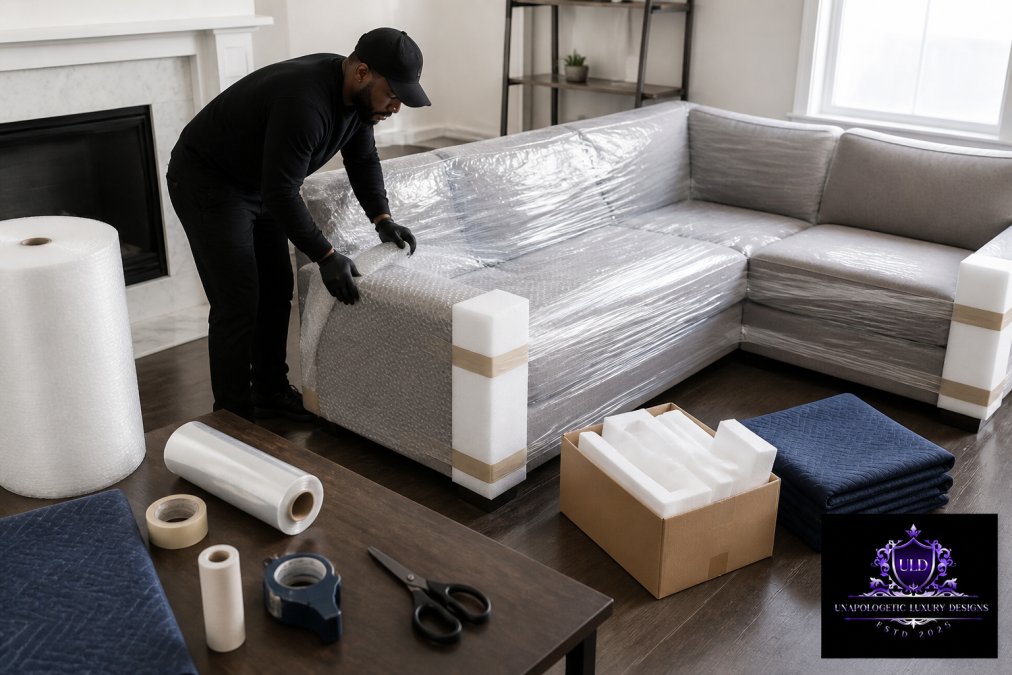
First, determine whether the retailer handles pickup or whether you're responsible for arranging carrier pickup. Some retailers provide prepaid shipping labels and arrange white-glove pickup from your home. Others require you to arrange your own freight carrier.
If you're arranging pickup, get quotes from multiple freight carriers. Large furniture typically ships via LTL (less-than-truckload) carriers. Request a return authorization number and tracking information. Document the pickup date and condition of the item before pickup.
Packaging is critical. Use bubble wrap for surfaces, foam corner protectors for edges, and heavy-duty plastic sheeting to protect against moisture. For upholstered pieces, wrap the entire item to prevent dust and debris during transit. Take photos of the packed item before pickup. evaluating return policies.
During pickup, ensure the carrier's representative documents the item's condition on the bill of lading. Get a copy with the carrier's signature and pickup date.
Once the item arrives at the retailer's warehouse, they'll inspect it for damage or additional wear. This typically takes 5-10 business days. If damage occurred during return shipping and the retailer determines it's not your responsibility, they should cover the cost.
Shipping Costs, Damage Responsibility, and Non-Returnable Items
Shipping cost responsibility is where many furniture return policies diverge significantly. Some retailers include return shipping in their return policy with prepaid labels and cover the cost. Others require customers to cover return shipping costs, which for large items can be $200-500, significantly reducing your net refund.
Damage responsibility during return shipping is equally important. Fair policies state that the retailer covers carrier damage on returns they initiated. If you initiated the return and damage occurred during your shipment, the retailer may deduct the damage cost from your refund.
Non-returnable items typically include:
- Final-sale or clearance items (explicitly marked at purchase)
- Custom or made-to-order pieces
- Items returned after the return window closes
- Items with significant damage, stains, or wear beyond minor inspection marks
- Discontinued or special-order items
Some retailers also exclude certain categories: outdoor furniture, certain upholstered pieces, or items over a specific weight or size. Check the return policy page for an explicit list before purchasing.
Sustainability and the True Cost of Furniture Returns
The environmental and operational cost of furniture returns is substantial and often invisible to consumers. Understanding this cost adds perspective to why some retailers charge restocking fees or limit return windows.

When you return furniture, the retailer must inspect it, clean it if necessary, repair any damage, and then either resell it, refurbish it, or send it to a landfill or recycling facility. For upholstered furniture, this process is resource-intensive. If the piece requires cleaning, it uses water and chemicals. If it can't be resold, it typically ends up in a landfill because recycling upholstered furniture is logistically complex and expensive.
Shipping furniture to you, then back, then potentially again represents multiple freight movements, each with carbon emissions. A large sectional that's returned might generate more transportation emissions in the return process than in the original shipment.
This is why many retailers impose restocking fees: they're attempting to recover the operational and environmental cost of processing the return. From a sustainability perspective, the best approach is to be intentional about your purchase. Measure your space, consider how the piece interacts with existing furniture, and review photos of similar pieces in real homes. The fewer returns you initiate, the lower the environmental and operational cost for everyone.
Some retailers now offer sustainability incentives: they'll waive or reduce restocking fees if you confirm you're keeping the item, or they'll donate items that can't be resold to charitable organizations rather than landfilling them.
Conclusion
A fair modern furniture return policy balances retailer protection with customer confidence. Before purchasing, verify the return window, understand restocking fees, confirm who covers return shipping, and know which items are non-returnable. At Unapologetic Luxury Designs, we believe bold, statement-making furniture deserves a thoughtful purchase process, which is why clarity around returns matters. Our curated collection of modern pieces is designed for longevity and timeless appeal. When you're ready to elevate your space with sophisticated design that stands the test of time, explore our collection of luxury furniture and discover pieces that transform your home into a personal sanctuary.
Frequently Asked Questions
Can I return modern furniture if I simply change my mind about the style or color?
Most modern furniture retailers allow returns for change-of-mind purchases, but it depends on the specific return policy and whether the item meets unused condition requirements. Check the original packaging and delivery date, most retailers require returns within 30 calendar days. However, restocking fees typically apply to items you've decided against rather than defective pieces, so verify the exact percentage before ordering.
What restocking fees should I expect when returning furniture?
Furniture return policy restocking fees vary widely but commonly range from 15% to 30% of the purchase price for unused items. Some retailers waive restocking fees for defective or damaged furniture, while others charge them regardless. High-end or custom pieces may have higher fees. Always review the specific return authorization policy before purchase, as fees directly impact your refund eligibility and final refund amount.
How long do I have to return modern furniture after delivery?
Furniture return window standards typically range from 30 to 60 calendar days from the delivery date or order approval, though some retailers extend to 90 days. The exact timeframe depends on the brand and item type. White-glove service deliveries sometimes have different return windows than standard parcel shipments. Check your proof of purchase and cancellation policy documentation immediately upon delivery to confirm your specific return window.
What happens if my returned furniture arrives damaged at the warehouse?
Damage during return shipping is typically the customer's responsibility unless the damage occurred due to poor packaging on your part. To protect yourself, document the item's condition before packing, use adequate protective materials, and consider purchasing shipping insurance for high-value pieces. If damage is evident upon warehouse inspection, you may face a partial refund rather than a full refund, depending on the inspection process and the retailer's policy.
This article was written using GrandRanker