

Table of Contents
- What Audacious Modern Interior Design Actually Means
- Maximalism and Eclecticism: Layering Visual Depth
- Best Practices for Mixing Patterns in Interior Design
- Modern Interior Design Color Palettes That Command Attention
- How to Style Bold Statement Furniture Without Overwhelming Your Space
- Curved Furniture, Organic Modern, and Textural Elements
- Bold Lighting and Statement Decor: The Finishing Touch
- Integrating Antiques and Heirlooms Into Audacious Modern Spaces
Last Updated: August 10, 2026
What Audacious Modern Interior Design Actually Means
Audacious modern interior design is the practice of creating bold, intentional living spaces that reject minimalism's restraint in favor of layered textures, statement pieces, and confident color choices. It's modern design with personality, spaces that feel curated rather than sparse, sophisticated rather than sterile. At Unapologetic Luxury Designs, we understand that audacious doesn't mean chaotic; it means purposeful boldness backed by thoughtful execution.
A room where each element serves the overall narrative, where texture dialogues with color, where vintage meets contemporary, where lighting becomes sculpture, that's audacious modern interior design done right. The 2026 design landscape has shifted decisively toward this direction. Interior Design Trends Report from the American Society of Interior Designers documents a marked move away from "empty-space minimalism" toward layered, textured interiors that tell a story.
Maximalism and Eclecticism: Layering Visual Depth
Maximalism isn't about filling every surface with stuff. It's about strategic abundance, choosing pieces that matter and arranging them so each enhances the whole. Eclecticism means mixing styles, eras, and aesthetics in ways that feel intentional rather than accidental.
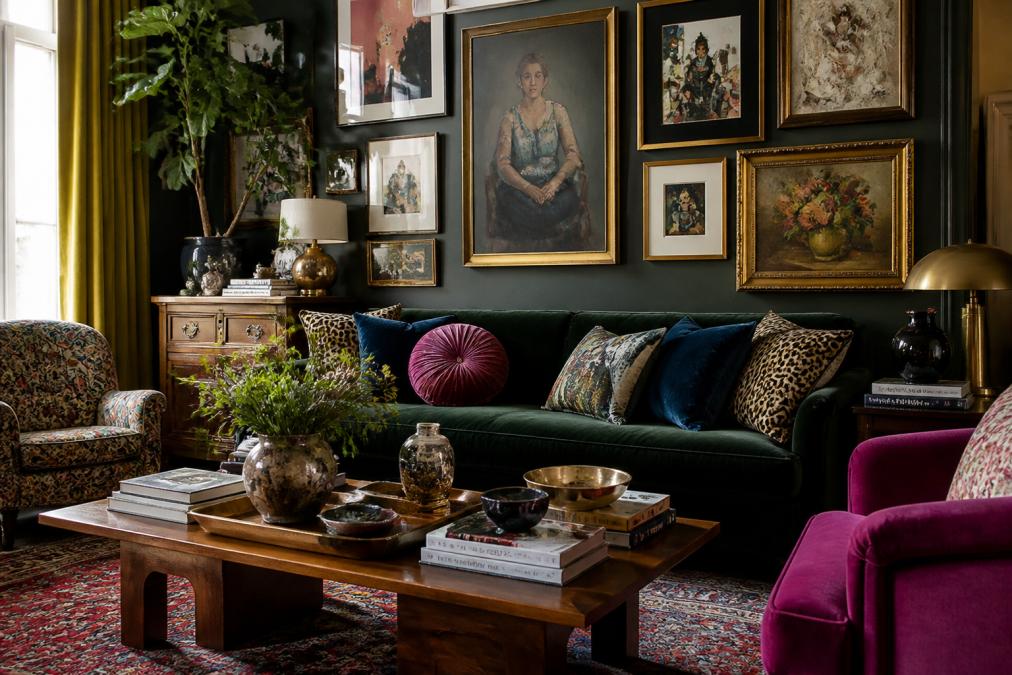
Humans find richly layered environments more engaging than sparse ones. A room with visual depth, where your eye travels from a patterned throw pillow to a sculptural brass accent to framed art, creates cognitive engagement and invites exploration. This is why maximalist spaces feel lived-in while minimalist ones often feel sterile.
Start by identifying your visual anchors, typically larger pieces like a statement sofa, bold area rug, or significant artwork. Layer in supporting elements: a textured throw blanket, decorative objects in complementary materials, intentionally stacked books. Each layer should reference something else in the room through color echo, material repetition, or stylistic thread.
Treat maximalism as a curatorial exercise. Every piece should advance the room's narrative and dialogue with existing elements. Unapologetic Luxury Designs' approach emphasizes this restraint-within-abundance philosophy, selecting pieces that command attention because they're exceptional, not because there are too many of them.
Best Practices for Mixing Patterns in Interior Design
Pattern mixing terrifies most people, but done well, it's the secret weapon of audacious modern interiors. Best practices for mixing patterns in interior design follow reliable principles that eliminate the guesswork.
Start with a pattern scale hierarchy: pair a large-scale pattern (bold geometric, oversized florals) with a medium-scale pattern (smaller geometric, traditional motifs) and a small-scale pattern (stripes, tiny florals, texture). This creates visual rhythm without overwhelming competition.
Color is your anchor. Patterns should share a cohesive color story. If your large-scale pattern features navy and cream, your medium pattern should pull from that same palette. When patterns share colors, they unify rather than compete, even if their visual styles differ dramatically.
Material matters as much as pattern itself. A geometric pattern on linen reads differently than the same pattern on velvet. Mixing pattern with texture, a patterned pillow against plush, solid-colored throws, creates sophistication.
Anchor patterns to furniture pieces: a patterned sofa, accent chair, or pillows on a bed. This creates zones of pattern rather than scattered visual noise. Solid upholstery, plain walls, and neutral rugs give the eye rest and make patterns more impactful.
Modern Interior Design Color Palettes That Command Attention
Modern interior design color palettes in audacious spaces reject safe grays and whites. They're intentional, bold, and often unexpected, with sophistication coming from understanding color theory and executing it confidently.
Warm neutrals form the foundation: creams, warm grays, soft taupes. These aren't boring, they're backgrounds that allow statement colors to breathe. A room painted in warm cream with a jewel-toned accent wall creates drama without chaos.
Jewel tones, emerald, sapphire, deep burgundy, rich ochre, have become the signature of audacious modern design. These colors carry sophistication because they're historically associated with luxury materials. A single jewel-toned accent wall or sofa becomes a focal point that elevates the entire room.
Accent color strategy prevents palette fatigue. Choose one or two accent colors that appear throughout the room in small doses, a throw pillow, artwork, decorative object. This creates visual continuity.
Lighting changes color perception dramatically. A palette that looks sophisticated in natural daylight might feel different under artificial light. Warm-toned bulbs (2700K) enhance warm neutrals and jewel tones. Cool-toned bulbs (4000K+) work better with cooler palettes. This technical consideration separates amateur color choices from professional ones.
How to Style Bold Statement Furniture Without Overwhelming Your Space
How to style bold statement furniture requires intentional placement and supporting elements. A single bold piece can anchor a room beautifully or dominate it uncomfortably.
Bold furniture needs breathing room. Consider your room's proportions before committing to statement pieces. A large, curved velvet sofa works in a spacious living room with high ceilings; in a compact apartment, it might overwhelm the space.
Support statement furniture with neutral or complementary surrounding elements. If your statement piece is a bold-colored sofa, keep walls neutral and let the sofa command attention. The principle is consistent: one major visual statement per room, supported by more restrained choices.
Lighting emphasizes or softens statement pieces. Directional lighting on a sculptural sofa highlights its form; ambient lighting creates a softer, more integrated feel.
Accessories matter for integration. A bold statement sofa needs throw pillows and blankets that reference its color or material without competing with it. Create a composed vignette around the statement piece, not visual noise.
In compact living areas, statement pieces must earn their space through function and beauty simultaneously. A curved, sculptural chair that also provides genuine seating comfort justifies its visual boldness. Unapologetic Luxury Designs specializes in pieces that deliver on both counts, sculptural enough to command attention, functional enough to justify their footprint.
Curved Furniture, Organic Modern, and Textural Elements
Curved silhouettes have become synonymous with audacious modern design. Unlike the sharp angles of minimalism, curves feel organic, sophisticated, and contemporary. Curved furniture in modern spaces creates visual softness without sacrificing sophistication.
Organic modern style emphasizes natural forms, curved lines, and materials that feel alive: walnut wood with visible grain, natural linen, leather that develops patina. These materials age beautifully, addressing the concern that audacious pieces feel trendy and dated quickly. A curved sofa in quality leather becomes more beautiful as it develops patina. A walnut table gains character through use.
Texture layering is the technical foundation of audacious modern design. Pair plush velvet with smooth brass. Layer linen with wool. Combine smooth stone with warm wood. Each material should feel distinct to the touch and visually. This multisensory approach separates designed spaces from decorated ones.
Humans are drawn to tactile variety, it signals richness and intentionality. A room with five different textures feels more sophisticated than a room with one. A sofa in performance fabric paired with a throw in natural linen and a pillow in velvet creates a space that appeals to multiple senses.
Organic modern avoids the cold precision of minimalism. Instead of stark white walls and glass tables, it features warm wood, soft textiles, and curves that echo natural forms. These elements feel contemporary because of their form, not because they're trendy. They'll work in 2027, 2028, and beyond because they're rooted in timeless principles.
Bold Lighting and Statement Decor: The Finishing Touch
Lighting is often treated as an afterthought. In audacious modern interiors, it's a design element as important as furniture or color. Bold lighting and statement decor transform a well-designed room into a truly sophisticated space.
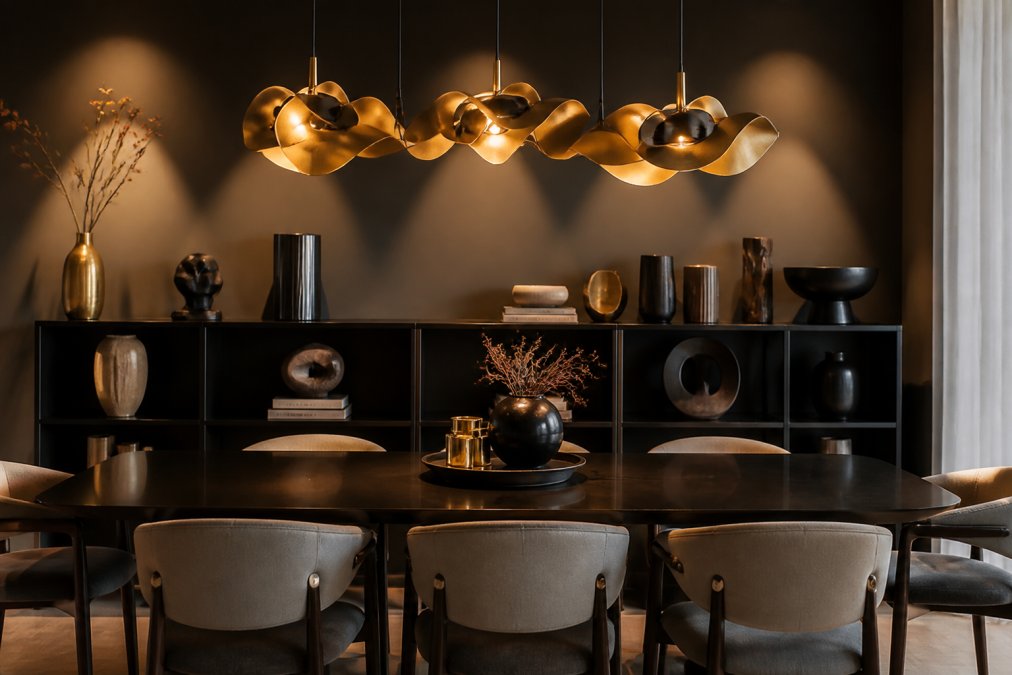
Statement lighting works on multiple levels. A sculptural pendant light in the dining room becomes artwork that also illuminates. A floor lamp with unexpected form adds personality while providing functional light. Choose lighting you'd want to look at even when it's not on.
Layered lighting creates sophistication. Ambient lighting provides baseline visibility. Task lighting serves specific activities. Accent lighting highlights specific pieces and creates drama. A room with all three layers feels intentional and professional.
Statement decor pieces, sculptures, art, curated objects, give audacious spaces character. A single sculptural object on a shelf, a gallery wall of curated art, or a collection of brass vessels arranged intentionally should reflect your interests and taste.
Proper lighting highlights statement pieces, making them feel intentional rather than random. Directional accent lighting on artwork makes it a focal point. Understanding this relationship separates amateur styling from professional design.
Integrating Antiques and Heirlooms Into Audacious Modern Spaces
One of audacious modern design's greatest strengths is its ability to honor the past while embracing contemporary aesthetics. Integrating antiques and heirlooms into modern spaces creates depth and narrative that purely new furniture cannot achieve.
Heirloom integration works because antiques bring authenticity. A Victorian chair reupholstered in modern fabric becomes a conversation piece. A mid-century table paired with contemporary seating creates temporal dialogue. These pieces carry history, which adds richness that manufactured newness cannot replicate.
Use heirlooms actively rather than protecting them as museum pieces. A family dining table should be used for meals. An inherited rug should be walked on. This active relationship creates the lived-in quality that makes audacious spaces feel genuine.
Styling antiques with modern pieces requires intentionality. Make the antique a focal point. A vintage Persian rug becomes the anchor for modern seating. An antique secretary desk becomes a statement piece in a contemporary bedroom. The juxtaposition of old and new creates visual interest and tells a story about the inhabitant's values.
Material compatibility matters. An antique wooden table in a room with modern metal accents creates cohesion through material dialogue. An inherited textile becomes the color anchor for the room's palette. These connections make the space feel curated rather than haphazard.
Audacious modern interior design isn't about spending the most or following trends blindly. It's about making intentional choices that reflect your personality while maintaining sophistication. The spaces that resonate most are those where every element serves the overall narrative, where color, texture, form, and function work together. Research confirms that intentionally designed spaces with layered visual interest actually improve wellbeing and satisfaction.
When you're ready to implement these principles, Unapologetic Luxury Designs offers curated statement pieces designed specifically for audacious modern interiors. From sculptural lighting to curved furniture to bold accessories, each piece is selected for its ability to command attention while maintaining timeless sophistication. Shop All and discover how the right pieces transform ordinary spaces into extraordinary sanctuaries that reflect your fearless aesthetic vision.
| Design Principle | Implementation | Impact |
|---|---|---|
| Maximalism & Eclecticism | Layer patterns, textures, and curated objects intentionally | Creates visual depth and engagement |
| Pattern Mixing | Pair scale hierarchy with shared color palettes | Achieves sophistication without chaos |
| Color Palettes | Use warm neutrals as base with jewel-tone accents | Commands attention while maintaining cohesion |
| Statement Furniture | Provide breathing room and neutral supporting elements | Emphasizes focal points without overwhelming |
| Curved Silhouettes | Incorporate organic forms in key pieces | Feels contemporary and timeless simultaneously |
| Bold Lighting | Layer ambient, task, and accent lighting | Transforms spaces and highlights statement pieces |
| Antique Integration | Use heirlooms as focal points, not museum pieces | Adds authenticity and personal narrative |
Frequently Asked Questions
What defines audacious interior design, and how is it different from maximalism?
Audacious modern interior design combines fearless aesthetic choices with intentional curation, it's bold but not chaotic. While maximalism embraces 'more is more,' audacious design applies restraint strategically. It uses statement pieces, vibrant color palettes, and textural layers to create spatial character, but each element serves a purpose. The difference: maximalism fills every surface; audacious design makes every piece count. Think curated galleries, not cluttered rooms.
How do I incorporate bold colors into modern home decor without making my space feel chaotic?
Start with a foundation of warm neutrals or polished materials, then introduce vibrant accents through statement furniture, artwork, or textiles. Use the 60-30-10 rule: 60% neutral base, 30% secondary color, 10% bold accent. Bold lighting and architectural details amplify color impact without overwhelming. Layer textures, plush textiles against sleek surfaces, to add visual depth. The key is balance: one or two bold focal points per room prevent sensory overload while maintaining sophistication.
Can I add audacious design elements to a small space without making it feel cramped?
Absolutely. Small spaces benefit from vertical visual interest: tall curved silhouettes, statement lighting, and layered wall art create spatial flow without consuming floor space. Choose fewer, larger statement pieces over many small ones, a bold sculptural chair commands attention better than scattered accessories. Use mirrors and polished materials to reflect light and expand perception. Organic modern elements like flowing textiles add personality while maintaining airiness. Scale matters more than quantity in compact rooms.
How do I know if audacious design choices will actually feel timeless or look dated in a few years?
Focus on pieces with refined silhouettes and quality craftsmanship rather than trend-driven gimmicks. Curved furniture, sculptural forms, and textural layering have endured for decades. Invest in bespoke or heirloom-quality pieces that blend modern function with timeless elegance. Trendy colors fade, but bold color palettes anchored in warm neutrals and polished materials age gracefully. Statement pieces from established design houses, not fast-fashion furniture, maintain their visual weight and relevance. Your design narrative should reflect personal taste, not fleeting trends.
This article was written using GrandRanker