

Table of Contents
- How to Evaluate Affordable Designer Quality Home Furniture Before You Buy
- Quick Comparison: Best Online Furniture Stores by Budget and Style
-
Store-by-Store Breakdown: Affordable Designer Quality Home Furniture Options
- Unapologetic Luxury Designs: Bold Statement Pieces at an Accessible Price Point
- Castlery: Mid-Century Modern Craftsmanship Direct to Your Door
- Pottery Barn: Timeless Investment Pieces Worth the Premium
- Ashley Furniture: Broad Selection Across Every Style and Budget
- Sohnne: Designer-Inspired Replicas for the Aesthetic-First Shopper
- Target: Trend-Driven Accents and Budget-Friendly Decor
- Durable Furniture Materials to Look For (and Red Flags to Avoid)
- How to Spot Quality Furniture Without Visiting a Showroom
- Designing for Small Spaces, Minimalist Aesthetics, and Modern Styles
- Second-Hand, Upcycling, and Sustainable Materials: Stretching Your Budget Further
- Which Store Should You Choose? A Decision Framework
Last Updated: August 3, 2026
The furniture industry has a dirty secret: most "budget" pieces cost you far more over time than a single quality purchase would have. Affordable designer quality home furniture is not a contradiction in terms, and Unapologetic Luxury Designs has built its entire curation philosophy around proving that point. Below, we break down exactly how to evaluate what you're buying, which stores actually deliver on the promise, and how to avoid the traps that turn a bargain into an expensive mistake.
Quick Picks:
- Best for bold statement pieces: Unapologetic Luxury Designs - curated, sculptural, designer-quality aesthetics at an accessible price point
- Best for mid-century modern: Castlery - direct-to-consumer craftsmanship with timeless appeal
- Best for timeless investment pieces: Pottery Barn - customization options and durable construction
- Best for broad selection: Ashley Furniture - every style and budget covered, including a Luxe line
- Best for designer replicas: Sohnne - iconic modernist silhouettes
- Best for trend-driven accents: Target - designer collaborations at genuinely affordable prices
How to Evaluate Affordable Designer Quality Home Furniture Before You Buy
What 'Designer Quality' Actually Means at an Accessible Price
Designer quality home furniture is engineered to meet the structural and aesthetic standards of high-end design without the boutique markup. The distinction matters because "designer-inspired" and "designer quality" are not the same thing. The former borrows an aesthetic. The latter replicates construction standards: solid wood frames, high-density foam seating, hand-finished surfaces, and upholstery with measurable thread counts and abrasion resistance.
At an accessible price point, quality is achieved through the direct-to-consumer model, which removes retail middlemen, and through manufacturing scale that spreads fixed costs across larger production runs. The aesthetic result can be identical to pieces sold at three times the price. What you pay at the top end is provenance, exclusivity, and showroom experience, none of which make your sofa more comfortable.
The Hidden Costs of Cheap Furniture
A particleboard dresser may warp within two years in a humid climate and resist refinishing. A solid wood frame piece at three times the price lasts decades, can be refinished multiple times, and retains resale value.
The real cost of "cheap" is not the sticker price, it is the sticker price multiplied by how many times you buy it. Hidden costs include replacement cycles every three to five years, assembly failures, shipping damage, and warranty gaps.
Quick Comparison: Best Online Furniture Stores by Budget and Style
| Store | Best For | Design Style | Price Point | Standout Feature |
|---|---|---|---|---|
| Unapologetic Luxury Designs | Bold statement pieces, design-conscious buyers | Modern luxury, sculptural | Accessible luxury | Curated indoor and outdoor collections |
| Castlery | Mid-century modern enthusiasts | Contemporary, classic | Mid-range | Direct-to-consumer craftsmanship |
| Pottery Barn | Investment pieces, customization | Timeless, transitional | Mid-to-high | Customization options available |
| Ashley Furniture | Broad selection, complete room sets | Every style | Budget to mid-range | Luxe line for designer-inspired looks |
| Sohnne | Designer replica aesthetics | Mid-century, European modernist | Budget-friendly | 60-day return policy |
| Target | Accent pieces, on-trend decor | Trend-driven | Very affordable | Designer collaborations |
Store-by-Store Breakdown: Affordable Designer Quality Home Furniture Options
The stores below were evaluated on construction standards, design coherence, value for money, and how honestly they represent their products online.
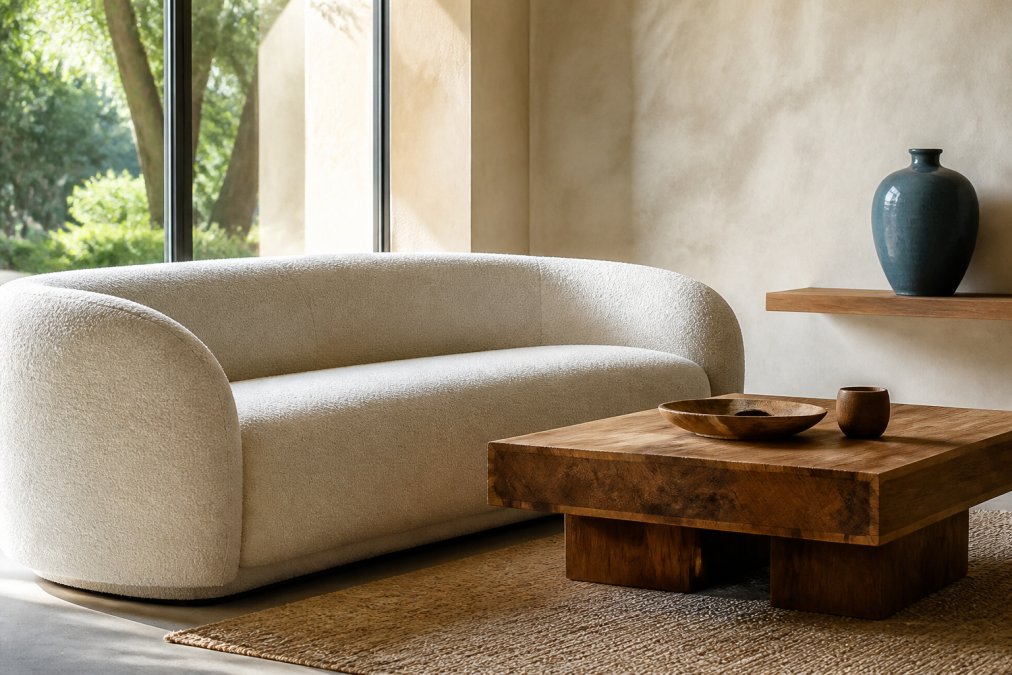
Unapologetic Luxury Designs: Bold Statement Pieces at an Accessible Price Point
The best option for design-conscious buyers who want sculptural, personality-driven furniture without boutique pricing is Unapologetic Luxury Designs. Every piece is selected to function as a statement within a considered interior.
What sets this collection apart is the combination of audacious design aesthetic with genuine everyday functionality. The indoor and outdoor collections are built around the same design language, which matters enormously if you are furnishing a cohesive home environment.
What works: Curated statement pieces that blend sculptural beauty with practical use across premium indoor and outdoor essentials.
What to know: Pricing varies by piece and collection. Visit unapologeticluxurydesigns.com directly for current pricing and availability, as the curated nature of the inventory means selections rotate.
Best for: Young professionals furnishing their first home who want bold, modern furniture that reflects genuine individuality, or homeowners undertaking renovations who need designer-quality aesthetics without boutique price tags.
Castlery: Mid-Century Modern Craftsmanship Direct to Your Door
Direct-to-consumer pricing is Castlery's primary advantage, delivering mid-century modern and contemporary design with construction quality that competes well above its price tier.
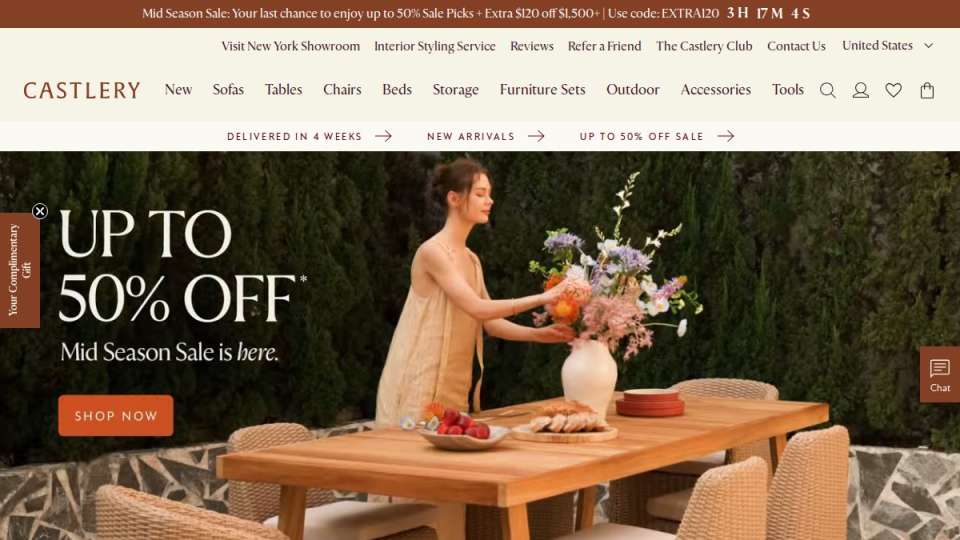
The design language leans heavily on neutral color palettes and natural finishes, making pieces inherently versatile across different interior styles.
What works: Pieces designed to outlast trends. The mid-century modern aesthetic has proven longevity and ages gracefully.
What to know: Limited physical showrooms mean you are committing based on product photography and customer reviews. The brand's online presentation is generally accurate.
Pros: Quality craftsmanship, timeless contemporary design, competitive direct-to-consumer pricing. Cons: Primarily online, prices sit above ultra-budget options.
Pottery Barn: Timeless Investment Pieces Worth the Premium
Pottery Barn occupies the space where higher price point is genuinely justified by construction quality, customization depth, and design longevity. The brand's emphasis on classic and transitional styles means these pieces do not go out of date. Customization options allow buyers to specify upholstery, finish, and configuration, which matters for renovation projects requiring specific dimensions or color matching.
What works: Warranty coverage, customization, and durable construction that makes these pieces genuinely heirloom-quality over time.
What to know: Delivery timelines can extend for custom orders. Factor this into renovation schedules.
Pros: Timeless designs, real customization, products match photography. Cons: Higher price point, potential for delivery delays on custom configurations.
Ashley Furniture: Broad Selection Across Every Style and Budget
Ashley Furniture's breadth is both its greatest strength and its most significant challenge. With options spanning every room, style, and budget tier, the brand is useful for outfitting an entire home, but quality varies considerably across product lines.
The Luxe collection is where Ashley makes its most credible case for designer-inspired furniture at accessible prices. Outside of that line, quality can be inconsistent, and buyers should pay close attention to material specifications.
What works: Complete furniture sets that simplify furnishing a room with a coherent aesthetic. Frequent sales and a stocked clearance section strengthen the value proposition.
What to know: Assembly is required for many pieces. The quality ceiling within the standard range is lower than Castlery or Pottery Barn.
Pros: Enormous selection, Luxe line for designer-inspired looks, regular promotions. Cons: Quality varies by product line; some assembly required.
Sohnne: Designer-Inspired Replicas for the Aesthetic-First Shopper
Sohnne occupies a specific niche: replicas of iconic designer furniture at a fraction of the original price. The brand targets buyers who want the visual language of mid-century modern and European modernist design without paying for authentic provenance.
The 60-day return policy reduces the risk of purchasing pieces that do not translate as expected from product photography to actual space.
What works: Access to iconic silhouettes at genuinely accessible prices. Wide selection covering popular modernist and mid-century styles.
What to know: These are replicas, not authentic designer pieces. Quality does not always match the originals, and material specifications vary.
Pros: Affordable entry into iconic design aesthetics, 60-day returns. Cons: Replica status means no original provenance; quality inconsistency across the range.
Target: Trend-Driven Accents and Budget-Friendly Decor
Target is where you buy the accent chair, the coffee table, and the decorative objects that complete a room anchored by a stronger investment piece. Designer collaborations deliver pieces that genuinely look more expensive than their price point. Free shipping on orders over $35 makes the economics work for accent and decor purchases.
What works: Trend-aware design at genuinely affordable prices. Convenient for completing a room without a separate specialist order.
What to know: Not the destination for heirloom-quality or structurally demanding pieces. Assembly is typically required.
Pros: Affordable, on-trend, designer collaborations, convenient shipping. Cons: Limited higher-end selection; not suitable for primary investment pieces.
Durable Furniture Materials to Look For (and Red Flags to Avoid)
Material education is the single biggest gap in most furniture buying guides. Knowing how to spot quality furniture separates satisfied buyers from those who are not.
Solid Wood Frames vs. Engineered Wood: What the Price Difference Buys You
Solid wood frames distinguish quality furniture from furniture that mimics quality at a distance. Hardwoods like oak, maple, and ash offer structural integrity that engineered alternatives cannot match over time. Joints in solid wood frames can be repaired; particleboard and MDF frames typically cannot.
Engineered wood performs well for flat surfaces like tabletops and drawer fronts. Problems arise when engineered wood is used for structural elements: legs, frames, and load-bearing joints.
Red flags to watch for:
- "Wood" in a product description without specifying the type
- Weight that seems low for the dimensions listed
- Stapled joints rather than mortise-and-tenon or doweled construction
- Flat-pack furniture with minimal hardware for structural connections
Upholstery, Textile Quality, and Finish: The Details That Reveal True Craftsmanship
Textile quality is where the gap between designer quality and designer aesthetic becomes most visible in everyday use. Relevant specifications are thread count for woven fabrics, double-rub count for upholstery durability testing, and density rating for foam seating.
A double-rub count above 15,000 is suitable for general residential use. Above 30,000 is commercial-grade. Anything below 10,000 will show wear within a few years of normal use.
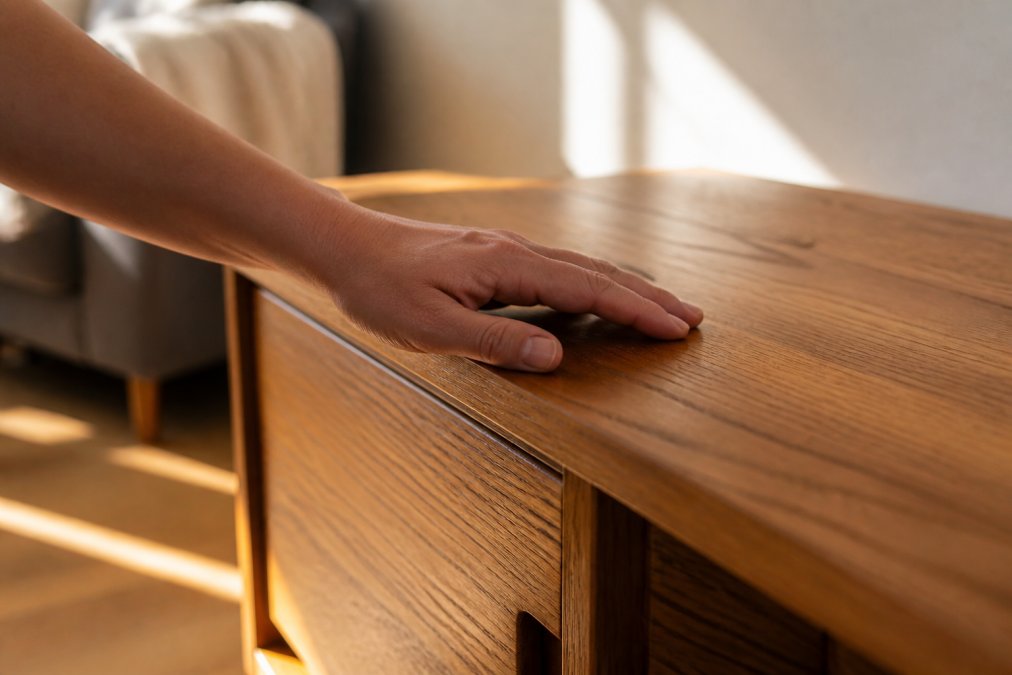
Finish quality on wood surfaces reveals craftsmanship. Run a hand across the surface: quality finishing is smooth and consistent with no raised grain or uneven texture. Check corners and undersides, where shortcuts are most common.
How to Spot Quality Furniture Without Visiting a Showroom
Check customer-submitted photos first. Official product photography is optimized for appeal. Customer photos show how pieces look in actual homes under real lighting. The gap between the two tells you how accurately a product is represented.
Read the specifications, not the descriptions. Marketing copy describes how a piece looks. Technical specifications tell you what it is made of. Look for frame material, foam density, fabric composition, and weight capacity. If these are absent, that absence is itself informative.
Evaluate the return policy before purchasing. A retailer confident in their product quality offers a meaningful return window. Short return periods and complex return processes are signals worth taking seriously.
Cross-reference customer reviews for recurring themes. When multiple reviewers independently mention the same issue, such as hardware that strips on assembly or upholstery that pills within months, that is a reliable quality signal.
Ask about warranty coverage explicitly. Many retailers offer limited warranties that exclude normal wear. A meaningful warranty is specific about what it covers and for how long.
Designing for Small Spaces, Minimalist Aesthetics, and Modern Styles
Space-Saving Solutions and Modular Furniture for Apartments
Space-saving solutions work best when they address multiple functions simultaneously. Modular furniture is the most versatile category: sectionals that reconfigure, storage ottomans that serve as coffee tables, and nesting tables that collapse when not in use.
Principles that matter for small-space furniture selection:
- Leg height: Furniture with visible legs reads as lighter and less space-consuming
- Scale: A single large piece typically reads better than multiple small pieces competing for attention
- Multifunctionality: Every piece should serve at least two purposes
- Color and finish: Light finishes and reflective surfaces expand perceived space
Modular furniture also reconfigures to fit different spaces as living situations change, extending the useful life of the investment significantly.
Adding Statement Pieces Without Overwhelming a Minimalist Interior
A minimalist aesthetic and a statement piece are not in conflict. The minimalist principle is deliberate restraint, not "no personality." One sculptural, design-forward piece in a quiet room creates more impact than a room full of competing objects.
Identify one anchor point per room: the sofa in a living room, the bed frame in a bedroom, the dining table in a dining area. That anchor piece carries the design statement. Everything else supports it without competing.
Second-Hand, Upcycling, and Sustainable Materials: Stretching Your Budget Further
The secondary market offers access to construction standards that are difficult to find at new-furniture price points. Vintage and pre-owned furniture often used solid wood frames and traditional joinery as standard practice.
Platforms like Chairish, Facebook Marketplace, and local estate sales regularly surface pieces with solid wood frames, quality upholstery, and strong bones that need only cosmetic attention. Reupholstering a structurally sound vintage sofa in quality textile costs a fraction of purchasing a new equivalent.
Sustainable materials are increasingly available in the new-furniture market. Look for FSC-certified wood sourcing, recycled metal hardware, and upholstery made from recycled or natural fibers. These specifications often correlate with higher overall construction quality.
The upcycling integration strategy works well when combined with a curated approach: invest in one or two new statement pieces from a quality source, then complement them with thoughtfully sourced vintage pieces that share the same design language.
Which Store Should You Choose? A Decision Framework
| Your Priority | Best Choice | Why |
|---|---|---|
| Bold, sculptural statement pieces with design coherence | Unapologetic Luxury Designs | Curated for design impact, indoor and outdoor collections |
| Mid-century modern with lasting craftsmanship | Castlery | Direct-to-consumer quality at competitive prices |
| Customized, heirloom-quality investment pieces | Pottery Barn | Customization depth and durable construction |
| Complete room sets across a broad budget range | Ashley Furniture | Widest selection, frequent sales, Luxe line available |
| Iconic designer silhouettes at accessible prices | Sohnne | Replica aesthetics, 60-day returns |
| Trend-driven accents and decor to complete a room | Target | Designer collaborations at genuinely affordable prices |
The best approach is a hybrid strategy. Anchor each room with one quality investment piece you will not need to replace. Build around it with considered secondary pieces from mid-range sources. Complete the room with well-priced accent pieces from accessible retailers. This is how experienced interior designers approach budget allocation.
For buyers who want those anchor pieces to carry genuine design ambition, the curation at Unapologetic Luxury Designs is the most direct path to that outcome at an accessible price point.
Furnishing a home well is harder than it looks, primarily because the market actively obscures the difference between furniture that looks good and furniture that is good. The hidden costs of cheap construction, the gap between product photography and reality, and the challenge of evaluating quality without a showroom visit all work against the buyer. Unapologetic Luxury Designs addresses this directly by curating bold, modern statement pieces that combine enduring craftsmanship with sculptural design, giving buyers a reliable source for designer-quality aesthetics without the boutique markup. Shop All at unapologeticluxurydesigns.com and build the interior you actually want.
Frequently Asked Questions
Is it worth buying more expensive designer quality furniture or should I go cheap?
Cheap furniture often costs more over time. Pieces built on solid wood frames with quality textile upholstery last years longer than flat-pack alternatives using particleboard. When you factor in replacement costs, delivery fees, and assembly time, affordable designer quality furniture from curated stores frequently delivers better value for money than budget options that wear out within two to three years.
How do I spot quality furniture when shopping online without seeing it in person?
Check the materials list first: solid wood frames, kiln-dried lumber, and high-density foam seat cushions are reliable indicators of durable construction. Read customer reviews for comments on weight, finish, and assembly experience. Look for warranty coverage details, which reputable stores include. Zoom into product photos to assess finish and texture, and check whether the brand publishes dimensions clearly, since vague specs often signal lower manufacturing standards.
What durable furniture materials should I look for when buying on a budget?
Prioritize solid wood or hardwood frames over MDF or hollow-core construction. For upholstered pieces, look for high-rub-count fabrics (above 15,000 double rubs for everyday use) and reinforced corner blocks. Metal hardware should feel substantial, not flimsy. Sustainable materials like FSC-certified wood or recycled steel indicate better sourcing standards and often correlate with longer product lifespans, even at accessible price points.
How do I find affordable designer quality home furniture that won't look dated in two years?
Focus on silhouette over surface trend. Mid-century modern lines, clean contemporary design, and minimalist aesthetic profiles have held their visual relevance for decades. Avoid pieces where the entire appeal is a specific color or finish that's trending right now. Sculptural, functional design with quality materials ages well. Stores that curate investment pieces rather than chase seasonal catalogs are a safer long-term bet than mass-market trend-driven retailers.
What are the hidden costs of buying cheap furniture?
Beyond the sticker price, cheap furniture typically adds costs through: replacement within two to three years, return shipping fees if quality disappoints, assembly tools and time for flat-pack furniture, and potential damage to floors or walls from unstable pieces. Some budget items also carry additional shipping logistics charges not shown upfront. Factoring these in, mid-range affordable designer quality furniture often lands at a lower true cost over a five-year period.
This article was written using GrandRanker