

Table of Contents
- Understanding High-End Furniture Renovation Principles
- Interior Design Rules for Furniture Layout and Spatial Balance
- How to Make Budget Furniture Look Expensive Through Strategic Styling
- Luxury Furniture Refinishing Techniques for Professional Results
- Creating Focal Points and Curated Aesthetics
- Lighting Techniques and Ambient Design for Luxury Spaces
- Sustainable Materials and Investment Value in High-End Renovation
- Conclusion
Last Updated: August 21, 2026
Understanding High-End Furniture Renovation Principles
High-end furniture renovation is the practice of transforming existing pieces through refinishing, restoration, or strategic styling to achieve luxury aesthetics without replacing entire furniture collections. At Unapologetic Luxury Designs, we understand that true sophistication comes from knowing when to restore, when to refinish, and when to layer statement pieces into a cohesive design narrative.
The distinction between renovation and replacement matters. Many homeowners assume that achieving a luxury aesthetic requires starting from scratch. That's expensive and unnecessary. The real skill lies in recognizing which pieces deserve investment and how to elevate them within a curated space. A well-executed renovation compounds in value, both financially and aesthetically, when paired with intentional design principles.
What separates a curated luxury space from a showroom of expensive objects is restraint combined with boldness. You're not trying to fill every corner. You're creating focal points, establishing visual rhythm, and ensuring every piece contributes to the overall spatial narrative. This approach requires understanding the foundational rules of interior design before breaking them strategically.
Interior Design Rules for Furniture Layout and Spatial Balance
Strategic furniture placement creates the foundation for sophisticated interiors. Without understanding spatial balance and proportional scale, even expensive pieces feel disjointed. The goal isn't to fill space, it's to distribute visual weight so the room feels intentional rather than cluttered.
The 60/40 Rule and Visual Weight Distribution
The 60/40 rule governs how much of a room should be occupied by furniture and decor versus open space. Allocate roughly 60 percent of your room to furnishings and 40 percent to breathing room. This ratio prevents overcrowding while maintaining a sense of abundance rather than emptiness.
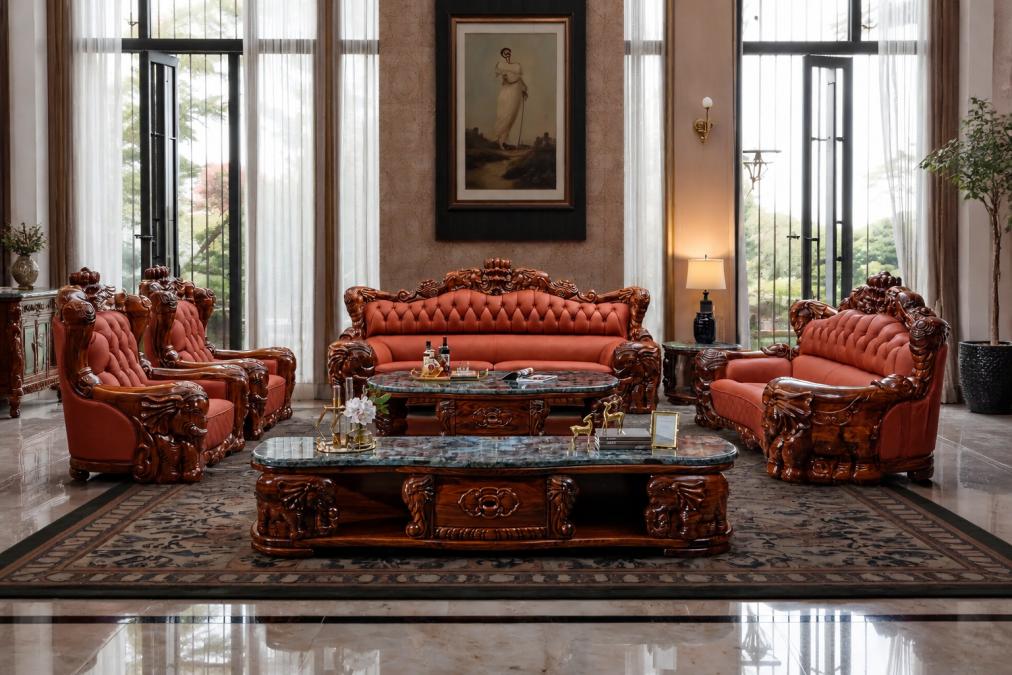
Visual weight refers to how "heavy" a piece feels visually, independent of actual mass. A dark leather sofa with intricate wood carving carries more visual weight than a light linen chair. In a balanced room, heavier pieces anchor one area while lighter elements prevent the space from feeling lopsided.
Place your visual anchor, typically the largest or darkest piece, opposite an empty wall or lighter elements. If you position a substantial sofa on one side of the room, balance it with open space or lighter accent pieces elsewhere. This creates movement that keeps the eye engaged without feeling chaotic.
Proportional Scale and Architectural Features
Scale matters more than price. A piece that's proportionally wrong for your space will never feel right, regardless of quality or cost. Measure your room's ceiling height, wall lengths, and doorway widths before selecting furniture. A low-profile sofa works in a modest apartment; in a villa-scale living room, it disappears.
Architectural features, fireplaces, built-in shelving, exposed beams, crown molding, should inform your furniture arrangement. These elements already establish visual hierarchy. Respect them. If your room has a fireplace, let it remain the focal point rather than fighting it with a competing arrangement. If you have high ceilings, use vertical elements like tall bookcases or statement lighting to draw the eye upward.
When selecting pieces from Unapologetic Luxury Designs, consider how their sculptural qualities interact with your room's architecture. The European Black & Gold Wood Carved Leather Sofa Set, for example, features intricate detailing that demands space to breathe. Cramping it into a small room diminishes its impact. In a properly scaled living room, that same piece becomes a statement that elevates everything around it.

How to Make Budget Furniture Look Expensive Through Strategic Styling
Luxury isn't always about price tags. It's about intentionality, material quality, and how pieces relate to one another. You can elevate moderately priced furniture through strategic styling choices that signal sophistication.
Material Quality and Texture Layering
Texture creates visual and tactile richness. Combine materials deliberately: pair leather with linen, wood with metal, matte with glossy. This layering technique adds depth and prevents a space from feeling flat or one-dimensional.
Focus on materials that age well. Genuine leather develops character over time (peer-reviewed research). Solid wood gains patina. These materials signal investment and longevity. Conversely, plastic, particle board, and thin veneers immediately read as temporary, no matter how well-styled.

When you layer textures, establish a hierarchy. Let one material dominate, say, a leather sofa, then introduce secondary textures through pillows, throws, and accent pieces. This creates visual complexity without chaos. A room with five competing textures feels scattered. A room with one primary material and three complementary textures feels curated.
Hardware Upgrades and Finish Details
Small details compound into perceived luxury. Upgrade cabinet hardware, drawer pulls, and furniture feet. Replace standard knobs with brass or brushed nickel finishes. Swap out plastic legs for wooden or metal alternatives. These changes cost little but signal that you've paid attention to every detail.
Finish durability matters. A matte finish hides fingerprints and dust better than high gloss, making maintenance easier and the piece look intentional rather than neglected. Satin finishes offer a middle ground, subtle sheen without the maintenance burden of high gloss.
Consider the patina you want. Do you want surfaces that look pristine, or do you prefer the warmth of slightly aged finishes? This decision shapes how you maintain and style your pieces. Distressed finishes hide wear; polished finishes require more care but signal precision and investment.
Luxury Furniture Refinishing Techniques for Professional Results
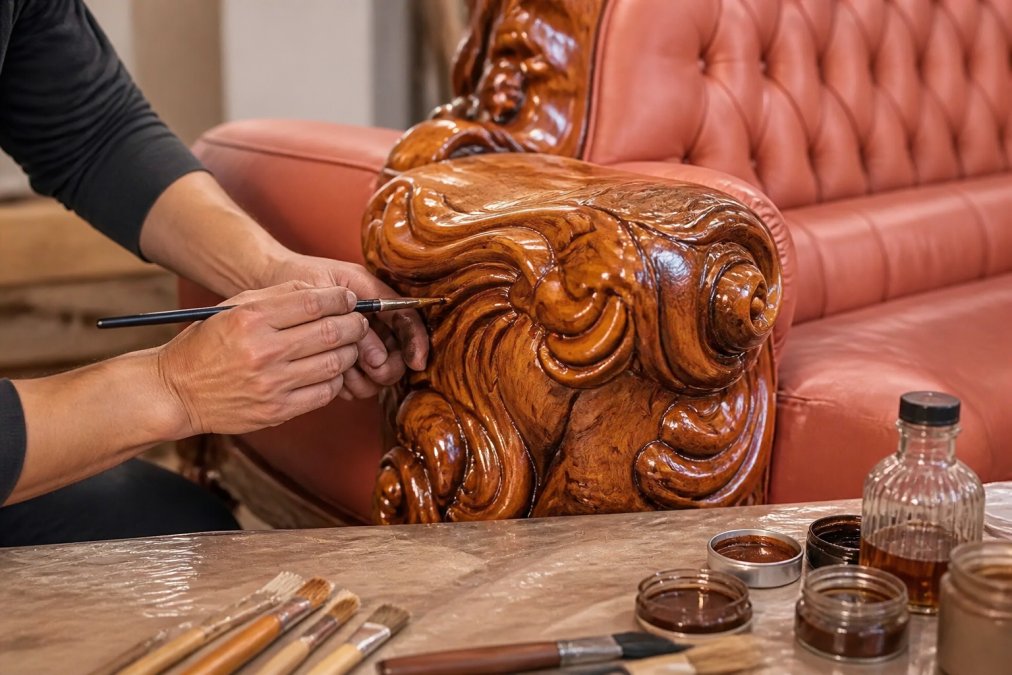
Professional refinishing transforms tired pieces into statement furniture. The difference between amateur and professional work lies in preparation, technique selection, and finish application.
Restoration vs. Replacement: When to Invest
Evaluate each piece honestly. Does it have structural integrity? Are the bones, frame, joints, legs, solid? Pieces with good bones deserve restoration. A sofa with a quality hardwood frame but worn upholstery is worth refinishing. A particle-board side table with veneer peeling is not.
Consider the piece's history and uniqueness. Vintage furniture with intricate carving or unusual construction warrants professional restoration. Mass-produced contemporary pieces rarely justify the cost. The Italian Genuine Leather Tufted Sofa Set from Unapologetic Luxury Designs, built with solid wood frames and high-density filling, represents the kind of investment-grade construction that rewards refinishing.
Cost analysis is practical. For heirloom-quality furniture or pieces with architectural significance, that investment makes sense. For trend-driven pieces, replacement often proves more economical.
Finish Durability and Maintenance of Luxury Pieces
Finish selection determines how your refinished piece will age. Polyurethane offers durability and water resistance but can feel plastic. Lacquer provides depth and warmth but requires regular maintenance. Oil finishes develop character but demand frequent conditioning.
The maintenance burden is real. High-gloss finishes show every fingerprint and dust particle. Matte finishes hide imperfections but can look dated quickly. Satin finishes represent the practical middle ground for most luxury interiors.
Protect finished surfaces from direct sunlight, which fades and degrades finishes over time. Use felt pads under furniture feet to prevent scratching. Dust regularly with microfiber cloths. These simple practices extend the life of refinished pieces dramatically.
For pieces you plan to keep for decades, invest in finishes that improve with age. Hand-rubbed oil finishes develop patina that signals authenticity and care. Lacquer finishes maintain their depth but require periodic reapplication. Polyurethane offers the most durability with minimal maintenance.
Creating Focal Points and Curated Aesthetics
A room without a focal point feels directionless. Your focal point anchors the space and gives the eye a place to rest. In most living rooms, this is the sofa. In dining spaces, it's the table. In bedrooms, it's the bed.
Once you establish your focal point, everything else supports it. Secondary pieces should be visually lighter or positioned to direct attention toward the anchor. Accent pieces add personality without competing for attention.
Curation means restraint. Choose pieces that speak to each other, through color, material, or design language. If your focal point is sculptural and bold, your accents should complement rather than compete. A room where every piece demands attention feels exhausting. A room where one or two pieces command focus, supported by complementary elements, feels sophisticated.
The European Traditional Carved Oval Dining Set from Unapologetic Luxury Designs exemplifies focal-point design. Its intricate carving and substantial presence naturally become the room's anchor. Everything else, lighting, wall color, secondary furniture, should support rather than distract from this statement piece.

Lighting Techniques and Ambient Design for Luxury Spaces
Lighting transforms perception. The same furniture looks dramatically different under harsh overhead lights versus layered ambient lighting. Luxury interiors use multiple light sources at different levels to create depth and drama.
Implement three types of lighting: ambient (overall illumination), task (functional lighting for activities), and accent (highlighting focal points). Layer these sources so you can adjust the room's mood. A chandelier provides ambient light, table lamps offer task lighting, and wall sconces accent architectural features or artwork.
Consider color temperature. Warm light (2700K) feels intimate and sophisticated (ies.org). Cool light (4000K+) feels clinical. For luxury interiors, warm light dominates. The French European Crystal Chandelier from Unapologetic Luxury Designs, with its light luxury design, pairs beautifully with warm-temperature bulbs to create the ambient richness that defines upscale spaces.
Position lighting to highlight your focal point. Accent lights directed at a sculptural sofa or carved dining table emphasize their detail and presence. Avoid placing all light sources at eye level, vary heights to create visual interest.
Dimmer switches are essential. They allow you to adjust lighting intensity based on time of day and desired mood. A space that's brightly lit for morning coffee can become intimate for evening entertaining with a simple adjustment.
Sustainable Materials and Investment Value in High-End Renovation
Sustainable materials increasingly define luxury. Pieces built from responsibly sourced wood, natural fibers, and durable construction hold value better than trend-driven alternatives. They also age gracefully, developing character rather than looking dated.
Genuine leather, solid wood, and natural textiles cost more initially but last decades. They're repairable and refinishable. Synthetic materials, while sometimes necessary, lack the longevity and refinishability that justify calling them investments.
Think of high-end furniture as a long-term asset. A sofa that costs more upfront but remains structurally sound and aesthetically relevant for 20 years represents better value than cheaper alternatives replaced every five years (the FTC). The Chesterfield Modular Genuine Leather Sofa Set from Unapologetic Luxury Designs embodies this principle, genuine leather develops a patina that signals authenticity and care, making the piece more valuable emotionally and aesthetically as it ages.
Sustainability also means avoiding pieces designed for planned obsolescence. Trend-driven designs age poorly. Classic silhouettes with quality construction remain relevant across decades and style shifts. When evaluating pieces, ask whether you'd want to keep them in 10 years. If the answer is uncertain, reconsider.
Creating a luxury space through high-end furniture renovation requires balancing investment with intention. You're not simply buying expensive pieces; you're curating a cohesive aesthetic where every element serves the whole. Unapologetic Luxury Designs specializes in statement pieces, from the sculptural Italian Genuine Leather Tufted Sofa Set to the intricate European Traditional Carved Oval Dining Set, that anchor rooms and reward refinement. Start with pieces that deserve investment, understand the spatial principles that make them work, and let your space evolve intentionally. The result is a home that feels genuinely yours, not borrowed from a showroom.
| Principle | Application | Expected Impact |
|---|---|---|
| 60/40 Rule | 60% furniture, 40% open space | Prevents overcrowding while maintaining abundance |
| Visual Weight | Balance dark/heavy pieces with light/open areas | Creates movement and prevents lopsided composition |
| Proportional Scale | Match furniture size to room dimensions and ceiling height | Ensures pieces feel intentional rather than cramped or lost |
| Texture Layering | Combine 3-4 complementary materials deliberately | Adds visual richness and sophistication |
| Focal Point Strategy | Anchor one primary piece, support with secondary elements | Directs attention and creates visual hierarchy |
| Ambient Lighting | Layer warm-temperature lights at varying heights | Transforms mood and emphasizes architectural features |
Frequently Asked Questions
What is the 60/40 rule for furniture design and how does it apply to high-end spaces?
The 60/40 rule states that 60% of your room should feature one dominant color or style, while 40% incorporates contrasting elements. In high-end furniture renovation, this principle prevents visual chaos while maintaining sophistication. Apply it by choosing a primary upholstery color for major pieces like sofas, then introduce accent furniture, artwork, and textures in complementary tones. This balance creates a curated aesthetic without appearing cluttered, allowing statement pieces to stand out rather than compete for attention.
How do you make budget furniture look expensive without compromising on materials?
Focus on styling, proportional scale, and strategic accessorizing rather than price tags alone. Invest in one or two high-quality anchor pieces like a genuine leather sofa, then layer in texture through throw pillows, area rugs, and artwork. Upgrade hardware on existing furniture, use ambient lighting to highlight details, and arrange pieces according to interior design rules for visual balance. Quality finishing touches, like adding sculptural accent pieces or refining color palettes, elevate any space. Pieces from Unapologetic Luxury Designs, such as the European Black & Gold Wood Carved Leather Sofa Set, deliver designer aesthetics at accessible price points without manufacturing shortcuts.
When should you restore versus replace high-end furniture pieces?
Restore furniture when the frame is solid, structural integrity is intact, and the piece holds investment value or sentimental importance. Professional restoration of intricate detailing, upholstery, or wood carving often costs less than replacing quality pieces. Replace when the frame is compromised, restoration exceeds the cost of replacement, or the piece no longer fits your curated aesthetic. Consider depreciation: vintage or bespoke pieces often appreciate, while trendy furniture depreciates. Solid wood frames with hand-carved details typically justify restoration; mass-produced pieces with veneer may not.
What materials should you prioritize when refinishing luxury furniture?
Prioritize genuine leather, solid wood frames, high-density foam fill, and sustainable materials that resist wear in high-traffic areas. Genuine leather develops character over time and cleans easily; avoid polyurethane substitutes. Solid wood, especially European hardwoods, supports intricate detailing and refinishing without veneer peeling. High-density foam maintains shape and comfort for years. For finishes, specify durable lacquers or oil-based stains that withstand temperature and humidity changes. Avoid water-based finishes on pieces exposed to moisture. Investing in material quality ensures your renovation withstands daily use and maintains its sophisticated appearance.
How do interior design rules for furniture layout prevent costly mistakes in renovation?
Design rules like the 60/40 principle, proportional scale guidelines, and spatial balance frameworks prevent oversized or undersized pieces that waste money and look awkward. Measuring ceiling height, doorways, and traffic flow before purchasing ensures pieces fit your space physically and visually. The 4-inch rule, maintaining 4 inches between furniture and walls, creates breathing room and prevents cramped layouts. Applying these rules during planning stages saves the cost of returns, repositioning, or replacing pieces that don't work. A well-planned layout maximizes your investment and creates the sophisticated, intentional aesthetic that defines luxury design.
What is the investment value of high-end furniture versus depreciation risk?
Genuine leather sofas, solid wood dining tables, and bespoke pieces with timeless design appreciate or hold value over time; trendy statement furniture depreciates. Invest heavily in anchor pieces, sofas, beds, dining tables, that define your space and withstand style cycles. Accent pieces can be bolder and more trend-forward since they're easier to replace. Sustainable materials and professional craftsmanship (like the hand-carved details in European luxury pieces) signal longevity and resale value. When evaluating pieces, consider their long-term value.
How does ambient lighting enhance the luxury aesthetic of renovated furniture?
Layered lighting, combining ambient, task, and accent lighting, highlights texture, material quality, and architectural features while creating mood. Warm-toned ambient lighting (2700K-3000K) complements leather, wood carving, and metal finishes, emphasizing sophistication. Accent lighting on artwork or sculptural pieces draws focus to curated elements. Dimmer switches allow flexibility between functional and intimate settings. A statement chandelier, like the French European Crystal Chandelier, becomes both functional and decorative, defining the room's luxury character. Poor lighting flattens even premium furniture; strategic placement transforms materials and detailing into focal points.
This article was written using GrandRanker